I Visa | Journalist Visa for The USA
- Requirements for media representatives
- Worldwide advice
- Advice from a U.S. attorney
U.S. visa for media representatives
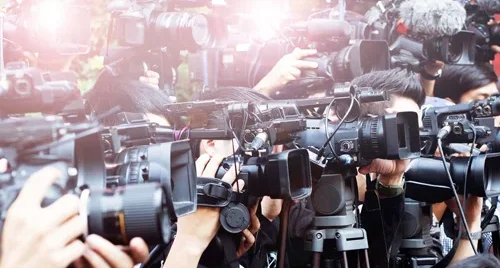
The I visa is suitable for individuals working in the media, press, and broadcasting sectors, such as journalists, reporters, editors, and individuals in similar occupations, if they wish to pursue their profession in the United States. Even if the stay in the U.S. is only for a few days, such activities may not be carried out on a visitor visa or visa-free. However, a B-1 visa is usually sufficient for purchasing equipment or rights for a foreign media company.
A B-2 visa must be applied for if a representative of foreign media wishes to give a paid or unpaid guest lecture in the U.S. or hold an event lasting no longer than nine days. However, such paid events may only have been held for a maximum of five institutions within the last six months.
How long is the I visa valid?
A stay in the U.S. with an I visa is generally not limited in time and is possible as long as the applicant meets the necessary requirements.
Unlike other non-immigrant visas, applicants for an I visa do not have to prove that they will maintain their residence abroad during their stay in the U.S.
What are the requirements for applicants?
A journalist visa for the U.S. is only issued to individuals who work in the media and wish to travel to the U.S. for professional reasons. Applicants must be employed by or work for a non-U.S. media company (e.g. as a freelancer) and have a press card.
When applying for an I visa, applicants must be able to present a press card, a corresponding employment contract, and a current letter regarding the specific assignment.
Freelance journalists are only eligible for an I visa if they meet the following criteria:
- They must be in possession of a certificate of eligibility from a journalistic organization.
- The assignment must have been commissioned by a media company.
- They may only disseminate information or news that is not primarily for commercial entertainment purposes.
- The following applies to the assumption of costs in connection with the production of (documentary) films: They must be predominantly covered by organizations or companies outside the U.S.
Requirements for the planned activity
It should be noted, however, that an I visa can only be considered if the activity to be pursued in the U.S. is primarily for information or education and not for entertainment. Individuals who wish to shoot videos or films for entertainment purposes are explicitly referred to the O visa or P visa, the requirements for which are not quite as easy to meet.
In principle, an E visa, H visa, or L visa may also be considered if the respective requirements are met. However, even if the requirements are met, a B-1-in-lieu-of-H-1B visa cannot be applied for in order to shoot a film or video of an entertainment nature.
The final decision on whether the requirements for a press visa are met, in particular whether the activity in the U.S. ultimately serves primarily to entertain or primarily to convey information or education, rests solely with the consular officer.
Video: All facts about the I visa for the U.S.
Family members and I visas for journalists and media representatives
Spouses and unmarried children under the age of 21 may accompany the applicant to the U.S. However, they will only be issued an I visa if they intend to live with the applicant in the U.S. for an extended period of time. For short-term visits, they must apply for a visitor visa (B-2) or enter the country under the Visa Waiver Program.
Neither the spouse nor the children are allowed to work in the U.S. However, they are allowed to attend school or college without having to apply for an F visa.
Neither the spouse nor the children are allowed to work in the U.S.
What is the processing time for a journalist visa?
For an I visa, you only need to fill out the DS-160 visa application form (electronically), pay the visa fee, and make an appointment at the consulate. This means that you do not need to submit a petition to the USCIS, nor do you need to send extensive documentation to the U.S. consulate by mail for preliminary review. The next available interview appointment at the consulate depends on the respective workload at the consulates. An appointment may be available within a few days, but it can also take weeks or months, which was particularly the case during the coronavirus pandemic.
Our advice on the I visa for the USA
We would be happy to clarify with you whether you meet the requirements for an I visa or what other visa alternatives exist in your specific case.
Please feel free to contact us if you would like to make an appointment for a consultation with one of our experts – either by e-mail (info@visum-usa.com) or by phone (+49 69 76 75 77 85 26). We will be happy to assist you in choosing the right visa and completing the necessary application process.

Kari Foss-Persson
U.S. Attorney at Law (MN, USA) specialized in U.S. immigration and visa law
Over 10 years of experience in U.S. immigration law; Kari personally guides individuals and businesses through the entire visa process – in German and English.
How we can help
Specialized in U.S. visas for entrepreneurs and skilled professionals – personalized guidance and professional handling
Our counsel
- U.S. visa advice from licensed U.S. attorneys at law
- Guidance throughout your application process – worldwide
- Employee assignments to the United States
- Specialized in advicing entrepreneurs, investors, and skilled professionals
What you can expect
- Clear assessment of your chances of success
- Specific recommendations for your U.S. visa
- Efficient handling of your visa matter
- Prompt clarification of your individual situation
- Clarity on tax, corporate, and employment law
How we work
- Personalized consultations by phone or video conference
- Response within one business day to your inquiry
- Appointment with a U.S. attorney usually within 48 hours
- No obligation – no hidden fees